Research · 2026
PainGone PainGuin — Pediatric Recovery Companion
A biodesign concept pairing a companion app with a physical plush penguin to help kids and parents manage recovery after pediatric tonsillectomy, cutting readmissions.
Role: Biodesign Team
Overview
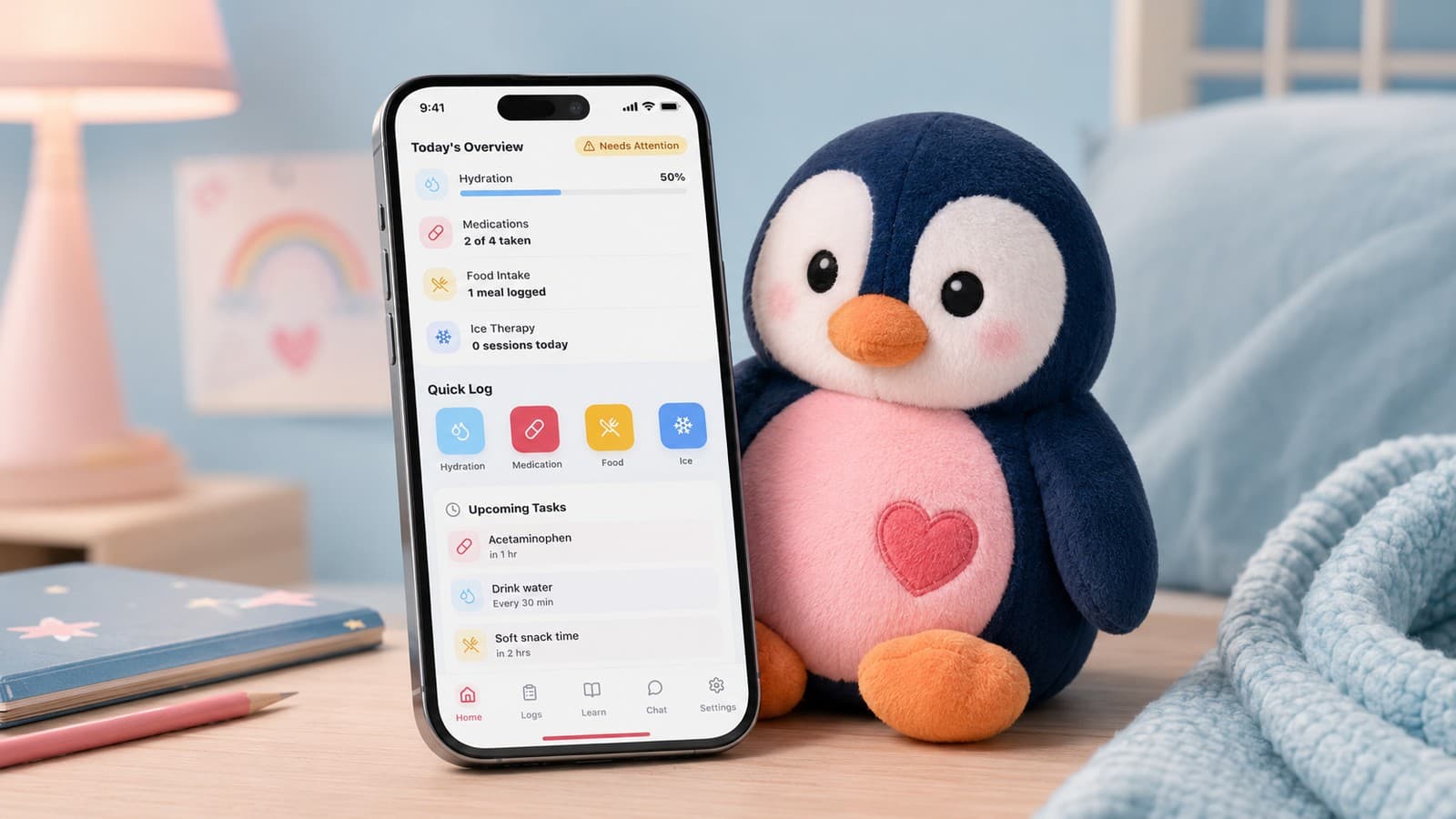
Pediatric tonsillectomy patients face high 7-day readmission rates driven largely by dehydration and uncontrolled pain, and parent interviews revealed real, sometimes dangerous gaps in discharge comprehension ("I only drank a few sips of water and fainted on day 2"). PainGone PainGuin addresses this with a companion app — paired with a physical plush penguin — that tracks post-op recovery, answers questions via a chatbot, engages kids through a gamified "PainGuin world," and connects directly to the care team. The team defined quantitative efficacy/usability/cost targets (e.g. ≥40% reduction in 7-day readmissions, ≤$20 total cost per patient) and mapped a path to adoption starting with a pilot in the Stanford CHARIOT Program.
Highlights
- Conducted patient/caregiver interviews to identify dangerous gaps in post-operative discharge comprehension.
- Defined quantitative need criteria (efficacy, usability, cost, safety) grounded in clinical literature, e.g. ≥40% reduction in 7-day readmissions and ≤$20 cost per patient.
- Designed a companion app + physical device concept and a business model with a staged path to hospital and insurer adoption.
Tech & topics
- Healthcare Innovation
- Product Design
- User Research
- Biodesign